

Your Cart

0

Suggested Item

Subtotal
$0.00

Please note: this webstore only allows checkout in the USA.
For a complete list of resellers, please visit our Where to Buy page.

By clicking Checkout you agree to our Terms of Service.
Charges will appear as RUPERT NEVE DESIGNS on your statements.

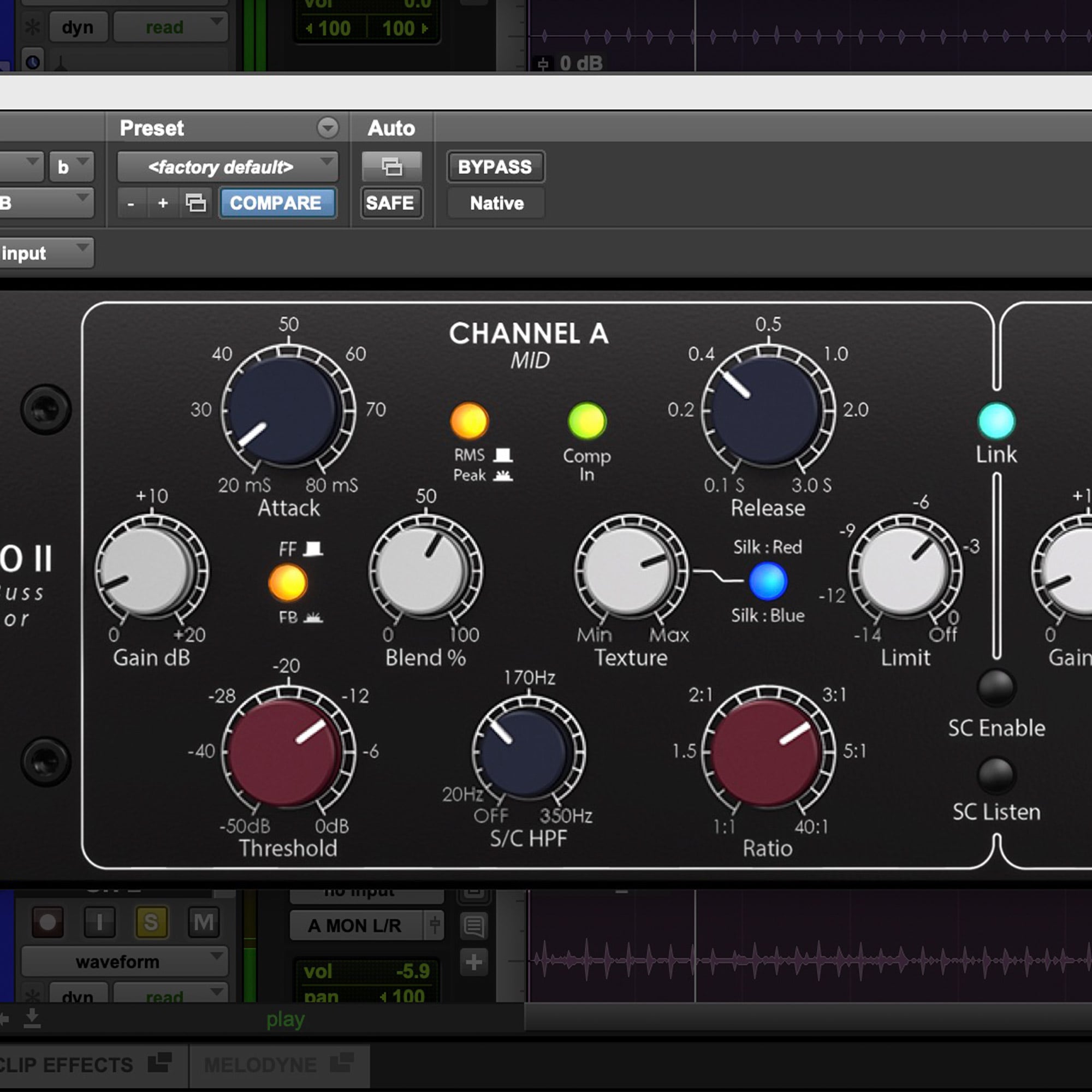
Image of Portico II Master Buss Processor

The ultimate dynamics, tone, and stereo field control for your 2-buss.

This plug-in is a faithful recreation of the legendary Portico II Master Buss Processor™ hardware released by Rupert Neve Designs in 2011: a creative tool that redefines the boundaries and limitations of traditional 2-channel compression and limiting. Though originally developed for mastering applications, the MBP quickly became a favorite of mix engineers, tracking engineers, and even FOH engineers. From mixing bass-heavy EDM to a delicate master of a chamber ensemble, it has something to offer everyone – no matter the use or genre. The plug-in was meticulously modeled to emulate everything the hardware offers, with the addition of several new features, including true M/S processing and a variable HPF for the side chain.

  • Sculpt your dynamics with compression options including RMS or Peak, Feed-Forward or Feed-Back, advanced side-chain controls, and Dual Mono, Stereo, and M/S modes
  • Silk Red / Blue + Texture circuit to enhance the harmonic content of your tracks in two different flavors
  • SFE Section allows for immense creative control over the stereo field
  • A creative tool that’s redefined the boundaries of traditional 2-channel compression and limiting for over 15 years
  • Originally developed for mastering applications, but brings power, punch and life to mixes, stems, or even individual tracks

Please note that an iLok account is required to use this plug-in. You can visit our Support page for more information.

$199.00

Located outside the USA? Please visit our Where to Buy page.

  • "I’ve owned a hardware MBP since the start. It is a remarkable finishing tool that can be used across all sort of busses. The plug-in looks, feels and sounds just like the box. No notes."
    JOHN O'MAHONY (METRIC, MATT MAESON, SARA BAREILLES)
  • “This is my M/S magic box! Having the ability to throw this on any of my mix groups is gonna open so many creative possibilities.”
    DANI MUNOZ (LANA DEL REY, MILEY CYRUS)
  • "Sounds like the real deal. Finally a plug-in solution to my beloved hardware!"
    PETE LYMAN (CHRIS STAPLETON, WEEZER, BRANDI CARLILE)

Used Worldwide Since 2011
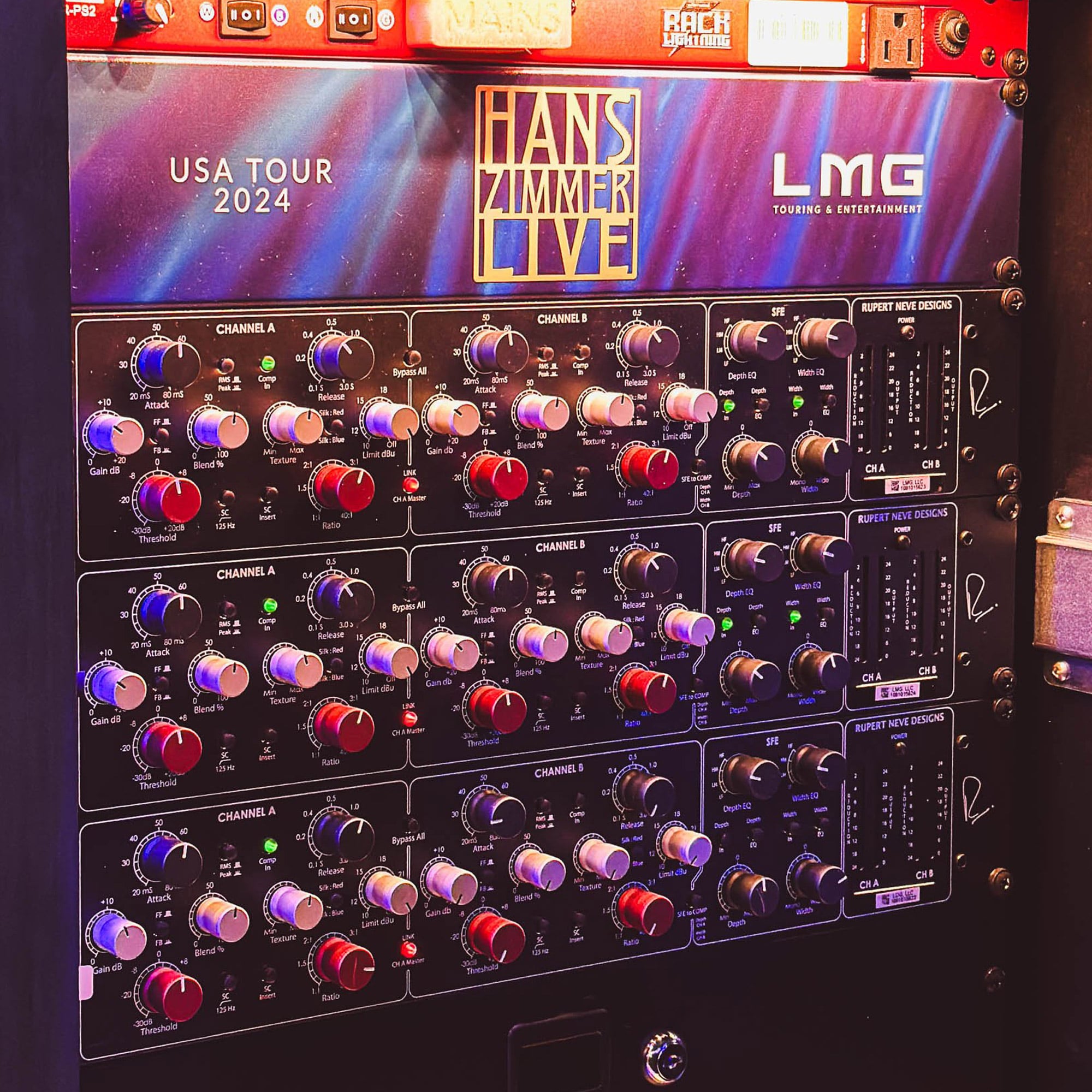
Since its release more than 15 years ago, the Master Buss Processor  has become an indispensable part of thousands of rigs around the world. From world-class mastering studios to arena headline tours all over the globe, the MBP shapes the sound of countless mixes every day and is beloved by professionals across every facet of the music production industry.

Complete Dynamic & Tonal Control

The MBP’s compressor sections allow virtually limitless possibilities in dynamics for any source, with comprehensive controls for ratio, threshold, attack, release, blend, side chain HPF, limit and make up gain. Feed-Forward / Feed-Back and Peak / RMS modes are also provided to further tailor the compression responses. Additionally, RND's unique Silk & Texture circuit allows you to fine-tune the amount (and type) of harmonic content in the output stage for highly musical tonal shaping.

Enhance Your Stereo Image

The stereo field editor on the MBP takes traditional mid-side techniques to new heights with width, depth and corresponding bandpass filters. The Width control increases or decreases the width of a stereo image, and Depth adjusts the spatial positioning of elements in the soundstage – and with the EQ filters engaged, you can do this on a frequency-dependent basis. This is especially useful when applied to groups or stereo components of a full mix, allowing you to fine-tune the stereo image in a simple, intuitive manner.

  • What type of compressor is the MBP plug-in modeled after?
    The MBP plug-in is modeled after the MBP hardware unit, which is based around a VCA circuit design. VCA compressors & limiters (the MBP has both) are known for their smooth & precise behavior, which makes them ideal for processing stereo busses, especially the master bus. VCAs aren’t known for imparting much ‘color’ so we recommend using the SILK section to do that!
  • How does M/S Mode work on the MBP plug-in?
    In M/S mode, CH A becomes the mid channel and CH B becomes the side channel. This means the compressor, limiter and SILK section of CH A & CH B can process the mid & side channels independently. In addition, the SFE section becomes even more flexible than when in DUAL MONO or STEREO mode because the range of the DEPTH (mid) and WIDTH (side) level controls increases from Mute (MIN/MONO) to +10 (MAX/WIDE). Between the compressor & limiter section, the SILK section and the SFE section, you now have complete & independent control over level, dynamics and color of both the mid & side channels.
  • What’s the difference between BLUE and RED SILK?
    Red SILK focuses the harmonics in the upper mids and highs while Blue SILK focuses the harmonics in the low mids and lows. The TEXTURE control allows you to fine-tune the ideal amount of harmonics added to the signal.
  • Is the gain reduction linked on the MBP plug-in when in STEREO mode?
    Yes, the gain reduction is linked for the compressor and/or the limiter when in STEREO mode. This usually best preserves the L&R balance and the center image positioning. However, we also recommend double-checking the same settings in DUAL MONO mode. Sometimes DUAL MONO mode can improve the stereo imaging and be the preferred sound, especially when using the MBP plug-in on the master bus.
  • How does the LINK button work on the MBP plug-in?
    On the 2-CH instance of the MBP plug-in, engaging the LINK button ‘links’ all the MBP controls to each other. This can be used in DUAL MONO, STEREO or M/S processing modes. Please make sure to engage link first if you want the controls to stay matched as you adjust one channel. Also note that the gain reduction is automatically ‘linked’ only when in STEREO mode.
  • Do I have to engage the COMP IN button if I only want to use the limiter?
    Yes, you do have to engage the COMP IN even if you’re only wanting to use the limiter. Once the COMP IN button is engaged, turn the LIMIT knob counter-clockwise from the ‘off’ position to begin applying gain reduction. Also, it’s important to note that if you only want to use the Limiter, then make sure the compressor RATIO setting is set to 1:1.
  • Does the gain reduction meter(s) display the gain reduction applied by both the compressor and limiter when they’re both being used?
    Yes, the GR meter(s) will display the total amount of gain reduction applied to the signal if both the compressor and limiter are active.
  • What does the SFE POST button do?
    The default signal flow of the MBP plugin is: SFE section > Compressor > Limiter > SILK > Output. This button allows you to change the order by placing the SFE section post compressor & limiter section. The signal flow when this switch is engaged is: Compressor>Limiter>SFE section>SILK>Output.